Forty Days of Fade: A Week-by-Week Autopsy of Your Haircut
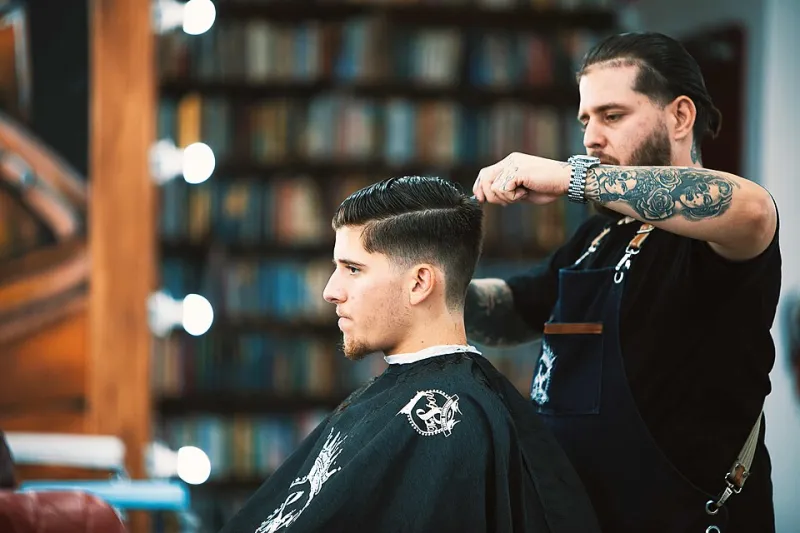
Photo: Crisarome, CC BY-SA 4.0, via Wikimedia Commons
There's a moment every barber knows well. A regular walks in, three weeks after his last cut, and asks why his hair 'suddenly went wrong overnight.' It didn't. It's been quietly falling apart since day ten — he just wasn't paying attention.
Here's the truth we rarely say out loud in the chair: a haircut isn't a purchase, it's a hire. And every hire has an end date. Let me walk you through the shelf life, week by week, so you can read the signs before your mirror does it for you.
Weeks One and Two: The Honeymoon
Fresh cut, everything sitting exactly where it should. The fade is crisp, the neckline is sharp enough to shave on, and you catch your reflection in shop windows on the way to work like some sort of narcissist. Enjoy it. Nothing to do here but a quick wash and go.
The only early warning sign arrives around week two: a faint fuzz at the nape of the neck. Nothing dramatic — more of a whisper than a beard. If you're particular, that's your cue to book. Most men ignore it. Most men are wrong.
Weeks Three to Five: The Slow Slide
This is where the fade starts its retreat. The skin at the bottom climbs higher, the blend softens, and suddenly your 'two all over with a skin fade' looks more like a vague suggestion of a haircut. Scissor crops hold on longer here — they're cut with growth in mind, so week four on a scissor work can still look intentional. A skin fade at week four looks like you've given up.
Signs to watch:
- The neckline creeping over your collar
- The blend losing its fade and becoming a 'step'
- Styling taking longer than thirty seconds
That last one's the sneaky one. When your five-minute morning routine becomes a negotiation with a round brush, the clock's ticking.
Weeks Six to Eight: The Grey Area
Here's where cuts diverge sharply. A longer, textured style — the kind you'd ask for if you're channelling a bit of peaky energy — can actually look better at week seven. It's got room to move, the shape settles in, and it stops looking 'freshly done' and starts looking lived-in. That's a feature, not a bug.
A fade, though? At six weeks you're in the grey zone — not shaggy enough for people to comment, not sharp enough to look after yourself. This is also when the sideburns start their independent campaign for autonomy.
Weeks Nine to Twelve: The Crisis
By week ten, we're past maintenance and into archaeology. The shape's gone, the weight's back, and you're doing the thing where you push your hair around with your hand in every reflective surface. Hairdressers call this 'the grown-out mess.' I call it job security.
The real cost isn't aesthetic — it's financial. Because here's the rub: a cut that's six weeks over is a correction, not a trim. We're not topping up, we're rebuilding. That can mean a shorter restorative cut than you wanted, or paying for extra time to sort the shape out. The denial haircut always costs more than the maintenance one.
The Case for the Standing Appointment
So what's the fix? Boring but effective: book your next cut before you leave the chair. Same slot, same barber, every four to six weeks depending on your style.
- Skin fades: every 3–4 weeks, no negotiation
- Scissor crops: every 5–6 weeks
- Longer textured styles: every 7–8 weeks, with a neckline tidy in between if you're fussy
A standing appointment removes the decision entirely. No more 'I'll sort it next weekend' for six consecutive weekends. And a regular slot means your barber knows your head, your growth patterns, and exactly how you like the arch over your ear — which means every cut comes out better than a one-off.
Twelve weeks is a long time in hair. Learn the timeline, book accordingly, and you'll never meet the crisis phase again. Your barber — and your shop-window reflection — will thank you.