Out of the Chair, Into the Drizzle: Keeping Your Cut Alive in British Weather
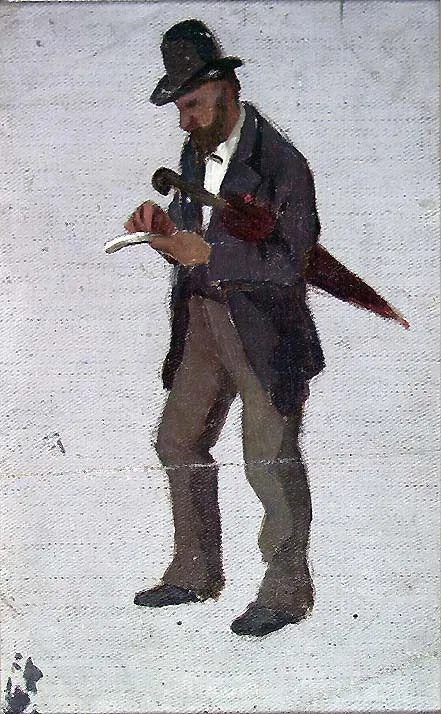
Photo: Frederik Collett, Public domain, via Wikimedia Commons
There's a special kind of cruelty in the British weather. You sit in the chair for forty minutes, walk out feeling like a new man, and within thirty seconds of leaving the shop the sky does what the sky always does. By the time you've reached the end of the high street, the crisp fade you paid for has gone full cockatoo.
After fifteen years behind the chair, I can tell you this: the weather doesn't ruin your hair. What you do in the first hour after the cut does. Let's sort it out.
The First Week Is When It Counts
Freshly cut hair is at its most vulnerable. When hair is damp — and it always is after a wash and a style — it holds whatever shape you set for it. Let it dry naturally in a muggy drizzle and it dries into whatever chaos the atmosphere fancies. That's why a cut looks immaculate on day one and slightly feral by day four if you've been careless.
The first seventy-two hours matter most. Treat your head like a fresh tattoo: protect it, don't mess about with it, and give it a chance to settle.
What Each Menace Actually Does
Fine drizzle is the quiet assassin. It doesn't soak you, so you don't react — it just softly resets your styling product and lets gravity take over. A quiff becomes a suggestion of a quiff.
Full proper rain is almost better, because at least you'll shelter. The damage comes from the towel-rub panic afterwards. Rough-drying wet hair scruffs up the cuticle and turns a slick finish into a bird's nest.
Humidity — that heavy, pre-thunderstorm air — makes hair swell and frizz. Curly and wavy lads know this pain intimately. Straight-haired men mostly get flatness instead: volume collapses like a bad soufflé.
Hard water, which most of England is cursed with, is the sneaky one. It leaves mineral deposits that make hair stiff, dull and harder to style. If your cut never quite sits right no matter what you do, your taps might be the culprit.
Products That Genuinely Fight Back
Skip the miracle claims. Here's what actually earns its shelf space:
- Matte clay or paste for short styles. It's reworkable — if the rain wrecks it, you can reshape with your fingers and it holds again. Wet-look gels set hard and crack.
- Sea salt spray for texture. Pre-styling with it gives fine hair something to grip onto, so it doesn't go limp in damp air.
- A light leave-in conditioner or curl cream for curly hair. Hydrated curls repel humidity far better than dry ones. Dry hair drinks moisture from the air — that's the frizz mechanism in a nutshell.
- A pocket comb, not your fingers, for emergency repairs. Fingers add oil and frizz.
One warning: more product is not more protection. A fistful of wax in humid weather is a paste, not a style.
Practical Tricks From the Chair
Invest a tenner in a decent compact umbrella. Not glamorous, but neither is explaining to your barber why your taper's gone.
Blow-dry, don't air-dry, on damp days. Getting hair fully dry with a bit of directional heat before you leave the house means the style is set before the weather gets a vote.
Carry the product, not the routine. A thumbnail of clay in a tin lives happily in a jacket pocket. Rework at the office loos and you're back in business.
Rinse after a soaking if you can. Sounds mad, but rainwater plus city grime plus sweat sets stiff and dull. A quick rinse and a re-style beats letting it bake.
Book strategically. If you've got a wedding, interview or big do, get cut two or three days before, not the morning of. Hair settles, and you dodge the worst of the fresh-cut fragility.
The Honest Bit
You cannot beat the British weather. Nobody can. What you can do is pick a cut and a finish that suit your actual life — if you cycle to work, a precision style that needs a mirror and twenty minutes is a fantasy. Tell your barber what your days look like. A good one will steer you towards something that survives a Brolly-less sprint to the chippy.
And if all else fails? There's always the hat. Just take it off before you come in — I need to see what I'm working with.