From Dalston to Leeds: Why the Fade Became Britain's Signature Cut
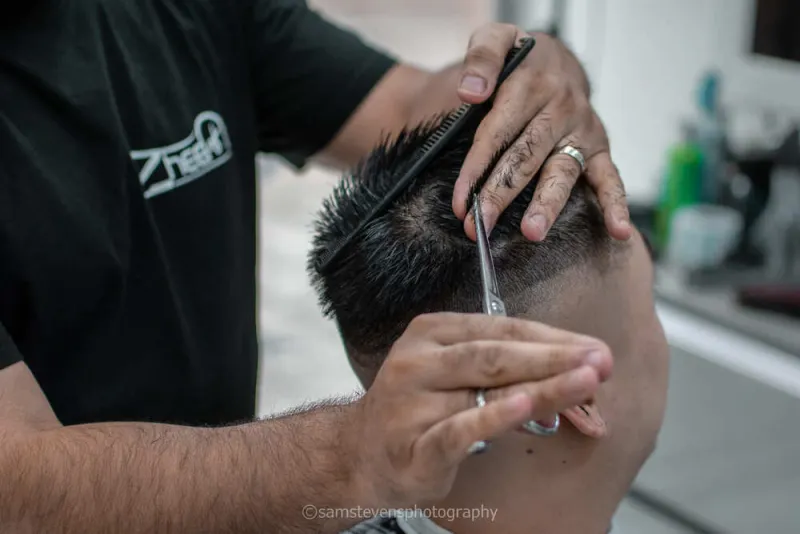
Photo: barber giving skin fade haircut in barbershop UK, via zheenbarbers.co.uk
Walk down any high street in Britain — whether it's Peckham, the Northern Quarter or a quiet suburb of Glasgow — and you'll see the same thing: men with fades. Sharp ones. Soft ones. Skin-tight at the sides, textured on top. The fade didn't start here, but somewhere along the way, British barbers made it ours.
I've been cutting fades for the best part of fifteen years, and I can tell you the UK didn't just copy the American version. We bent it, softened it, and adapted it to our hair types, our weather, and our slightly awkward national reluctance to look like we're trying too hard.
The American Import
The classic fade came over from US barbershops — think 1980s Harlem and Chicago, military-adjacent precision, skin blending into longer hair with zero visible steps. When it landed in Britain in the late 2000s and early 2010s, it arrived via YouTube tutorials and, more importantly, via a generation of barbers who'd grown up on hip hop, grime and a newfound pride in barbering as a craft.
East London was the crucible. Shops in Dalston, Hackney and Peckham took the skin fade and pushed it to its extreme — zero at the sides, blended so tight you'd see scalp. It suited the Afro and textured hair types common in the area beautifully, and it photographed brilliantly for the Instagram era that was just kicking off.
The Northern Softening
But here's where it gets interesting. Head up the M1 and the fade starts to change character.
Leeds, Manchester, Sheffield — the Northern style scenes took the same technical foundation and made it less aggressive. You see more low fades than high ones. More scissor work on top. Textured crops sitting on top of tapered sides rather than slick finishes. There's a practicality to it — it needs to survive rain, work canteens, and a pint in the pub after football.
I'd argue the British fade is defined by this tension: precision underneath, effortlessness on top. The Americans often go for maximum contrast; the British version is more about blending into real life.
Why Our Hair Made Us Innovate
A lot of British men have fine or medium hair — the kind that goes limp in humidity and shows every scissor mark. That forced UK barbers to get better at texture. Point cutting, slicing, using thinning shears properly rather than reaching for the clippers on top. The result is a national style that's less uniform, more individual.
Curly and Afro-textured hair, meanwhile, pushed the skin fade to its highest form here. A tight blend through a natural curl pattern is one of the hardest things in barbering, and Britain now produces some of the best in the world at it. Look at the portfolios coming out of London, Birmingham and Bristol if you doubt me.
Choosing Your Version
So which fade suits you? A rough guide from my chair:
Rounder faces benefit from a high fade — the skin-tight sides add visual height and lengthen things out. Longer or narrower faces should stay lower and softer; a high skin fade on a long face can exaggerate everything in the wrong way.
Fine, straight hair wants a low or mid fade with a textured top — think French crop or messy quiff. Heavy, thick hair can handle a high fade and keeps its shape for weeks. Curly hair is the natural home of the skin fade — let the top do the talking and keep the sides disciplined.
And a word on maintenance: a fade is a haircut with a shelf life. Two to three weeks, then it's back in the chair. That's not a flaw — it's the deal. The best fade you'll ever get is the one you keep up.
A Cut That Belongs Here Now
The fade is global, sure. But the British take — textured, understated, built for our hair and our lives — is genuinely its own thing. Next time you're in the chair, ask your barber to blend it their way rather than copying a photo from LA. Chances are they know something the internet doesn't.